

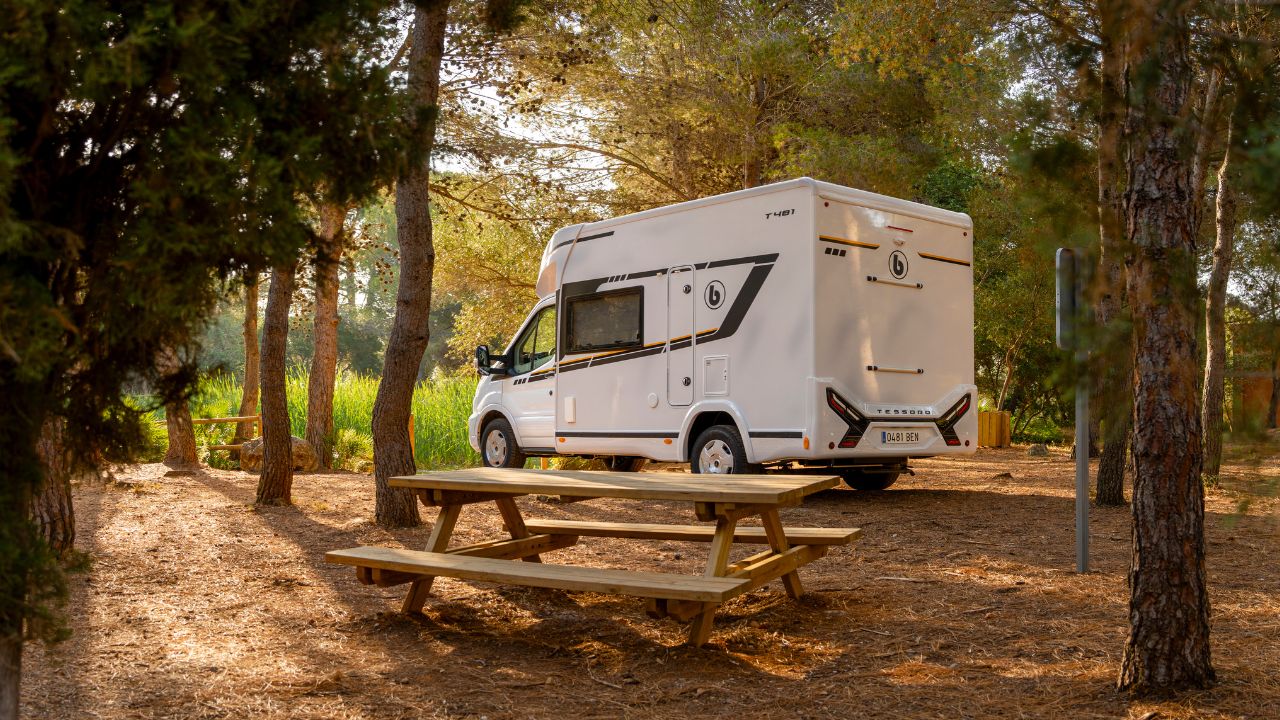
The Regulations on motorhomes in Spain has just taken an important step for the motorhome sector. The approval of Royal Decree 518/2026 introduces an amendment to the General Traffic Regulations that clarifies how motorhomes and other vehicles fitted out as accommodation should be parked. This change has been eagerly awaited for years by users, associations and companies in the sector. If you travel by motorhome or are thinking of doing so, read on because this development will be of interest to you.
What’s changing in the regulations for motorhomes
The new text includes a specific section in the Article 92 of the General Traffic Regulations. It sets out the conditions that motorhomes and other residential vehicles must meet in order to park correctly.
The key point is that the regulation recognises the discrimination-free motorhome parking, provided that the vehicle is parked in the same way as any other motor vehicle and no activities typical of camping take place.
This represents a significant step forward for motorhome tourism. Until now, many users have encountered differences in regulations between local authorities. In some cases, motorhomes were fined or restricted from parking simply because they were motorhomes. This amendment provides greater clarity and legal certainty.
How to park a motorhome
The new regulations set out three basic conditions for a motorhome to be correctly parked:
- Do not extend any parts that protrude beyond the vehicle’s perimeter, such as awnings, tables, chairs or stabilising legs.
- Relying solely on tyres, although the use of safety chocks or wedges is permitted.
- Do not spill fluids from the passenger compartment, such as greywater or other waste.
In summary, a motorhome may park provided it remains within its own boundaries, does not occupy more space than it is entitled to, and does not discharge waste. In other words, it may be parked, but not camped.
Parking is not the same as camping
One of the most important aspects of this change is that it helps to distinguish between two concepts that often cause confusion: parking and camping.
A motorhome parked correctly should not be treated any differently from other vehicles. It may be parked provided it complies with general traffic regulations and the specific conditions set out in the New Article 92.
However, if awnings are put up, chairs or tables are brought out, legs that protrude from the vehicle are fitted, or liquids are poured out, this is no longer simply a case of parking. In that case, the use may be considered camping and may be subject to other regulations.
What role do local councils play?
The Royal Decree also introduces changes to municipal regulations. Although the former Article 93 on municipal by-laws has been repealed, local councils retain the power to regulate stopping and parking on urban roads under Article 156.
This means that local authorities can set time restrictions, designated zones or parking charges. They may also order the removal or immobilisation of vehicles in certain cases.
That said, there is one key point: Restrictions must be justified and apply to all vehicles, not just motorhomes or campervans. Therefore, no specific restrictions should be imposed simply because a vehicle is a motorhome.
This aspect is particularly important for the sector. The new wording aims to prevent discriminatory treatment and provide a common reference point for users, public authorities and traffic officers.
A step forward for caravanning in Spain
According to ASEICAR, the Spanish association for the caravanning industry and trade, this amendment marks a historic milestone for the development of caravanning in Spain. The sector had been calling for clear regulations on motorhome parking for over 15 years.
The inclusion of this provision in the General Traffic Regulations is welcome news for those who favour a flexible, free and environmentally conscious way of travelling. It also helps to improve co-existence between road users, local authorities and residents.
Spain is a country with great potential for motorhome tourism. Having clearer regulations helps to improve the travel experience and encourages the responsible use of these vehicles.
We’re still enjoying the trip
The new regulations on motorhomes in Spain represent an important step forward for the sector and for users. The General Traffic Regulations clarify that a motorhome may park without discrimination provided it does not extend any external features, rests on its tyres and does not discharge any fluids.
Local councils will still be able to regulate parking on urban roads, but any restrictions must be justified and applied across the board. This clarification helps to dispel doubts and provides greater certainty for those travelling in motorhomes.
At Benimar We’ll keep a close eye on any developments affecting caravanning and itinerant tourism.