

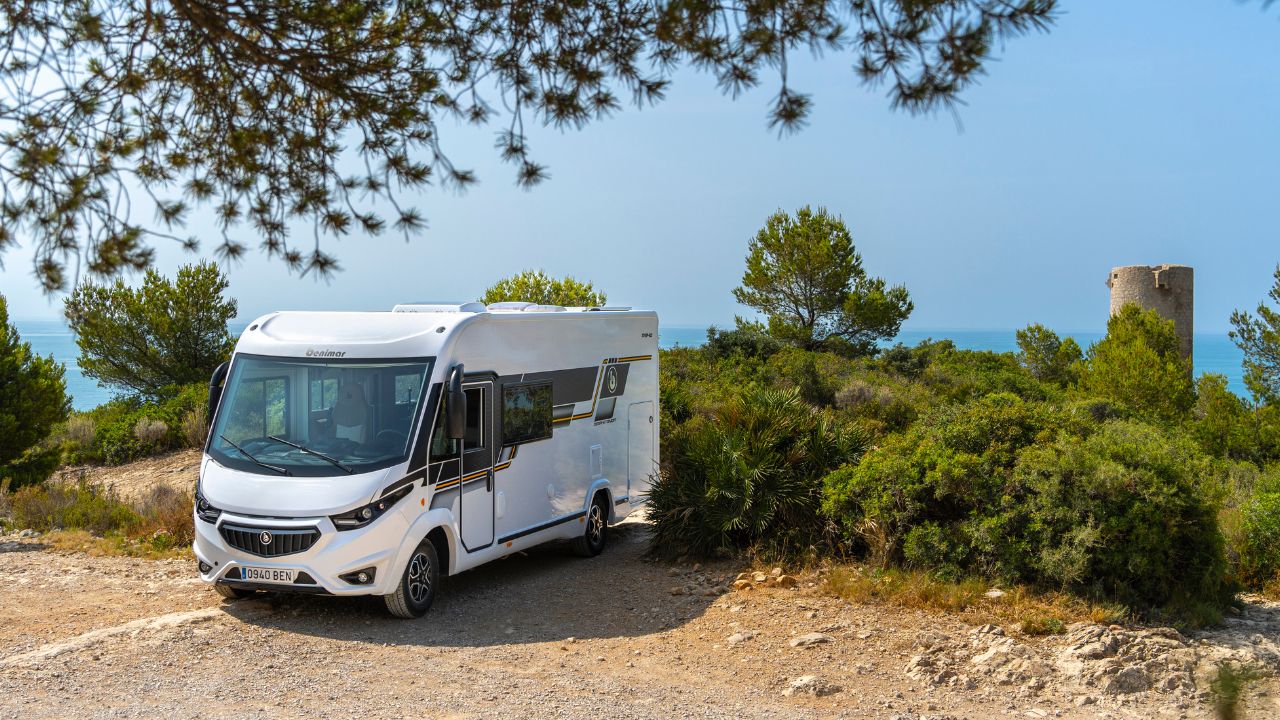
A Motorhome parking in Spain is one of the most frequently asked questions among travellers. Can I sleep inside if I'm on the street? Is parking the same as camping? Are there time limits? Being familiar with the regulations and practical advice will help you get around without any worries and enjoy your route to the fullest. In this guide, you'll find all the essential information you need to make your trip safe and free of fines.
How long can a motorhome be parked on the street?
The first question many users ask is how long are they permitted to park. The answer is simple: a motorhome can remain parked for the same amount of time as any other vehicle. This means that if a street allows unlimited parking, you can leave your motorhome there without any problem.
However, in areas with time restrictions (blue or green zones, for example), you must comply with the same regulations as a car. Under no circumstances is it permitted to remain parked beyond the time indicated by the parking signs.
Tip BenimarIf you are going to leave your vehicle on a public road for several days, try to alternate locations to avoid complaints from neighbours. Although it is not illegal, it can cause inconvenience in some neighbourhoods.
Regulations on motorhome parking
The The Directorate-General for Traffic (DGT) is clear on this point: a motorhome is parked provided that the following conditions are met:
- Only occupy the space marked by the parking lines.
- Items such as awnings, chairs or tables are not opened out.
- No liquids or waste are dumped.
- The vehicle must be immobilised with the engine turned off.
It is important to differentiate between parking and camping. While parking means leaving your vehicle stationary in a permitted space, camping involves outdoor activities or altering the environment, and this is only permitted in specific areas or campsites.
You must also take into account local by-laws. Although the DGT sets general regulations, some local councils apply additional restrictions, such as prohibiting motorhome parking in historic centres or limiting the number of hours.
Where can you park and sleep in a motorhome?
The possibility of spending the night in your motorhome is one of the great advantages of travelling on wheels. However, not all places are suitable or legal to do this.
- Motorhome areas:: these are spaces designed for this type of vehicle, usually located in cities, towns or near tourist routes. They usually offer services such as water refilling, waste disposal and electricity.
- Camping Sites: the best option if you want to spend several days in the same place and enjoy amenities such as showers, a swimming pool or a restaurant.
- Public roads:you are allowed to sleep in your vehicle as long as it is properly parked and no items are left outside.
Remember: sleeping is not camping. You can rest easy in your motorhome as long as it is properly parked.
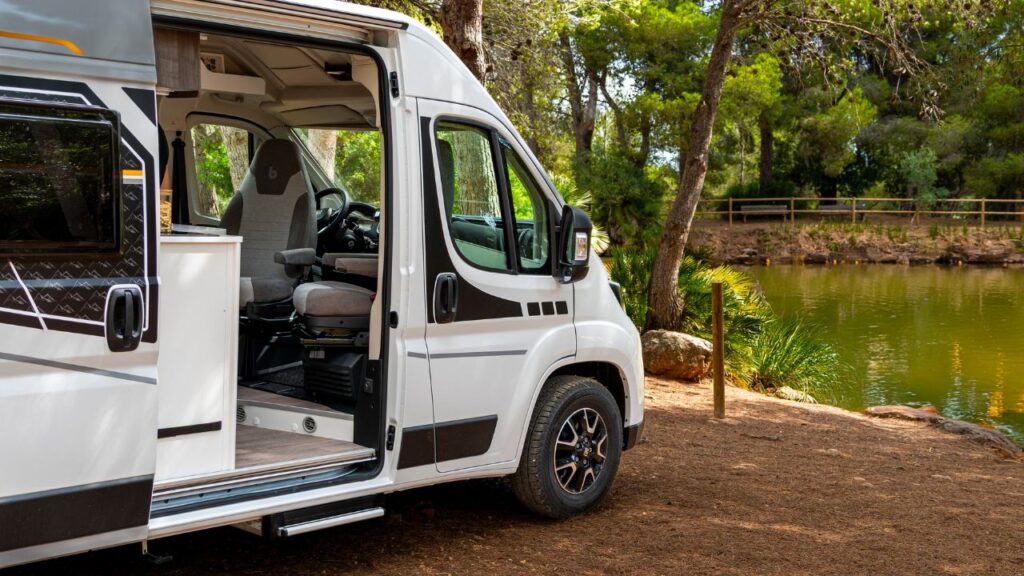
Common mistakes when parking a motorhome
To avoid fines or bad experiences, it is a good idea to keep in mind the most common mistakes:
- Confusing parking with camping:putting up an awning or opening windows that protrude is considered camping.
- Not checking local regulations:each local council may have its own rules, and not knowing them does not exempt you from a fine.
- Taking up more space than allowed:parking on pavements, lanes or pedestrian crossings causes problems and results in fines.
- Parking in prohibited natural areas:such as beaches or protected parks, where the legislation is very strict.
- Not thinking about coexistence:even if it is legal to park on a residential street, leaving a motorhome there for several days can inconvenience neighbours.
A little planning and common sense will make your trip much more enjoyable.
Practical tips for hassle-free parking:
- Plan your routeuse apps or online maps that show nearby motorhome areas.
- Look for spacious areas:avoid narrow streets where manoeuvring is difficult.
- Prioritise safety:park in well-lit, busy areas to reduce risks.
- Always respect the environment:do not leave litter or make annoying noises, especially in residential areas.
- Carry cash:many areas or regulated zones operate with parking meters.
Motorhome parking in Spain does not have to be a headache. The key is to know the basic regulations, respect local rules and be aware of the difference between parking and camping. This way, you can move around freely, sleep in your vehicle and enjoy the camper van experience to the fullest.